IOP Physics World
 Astronomy and space
 Atomic and molecular
 Biophysics and bioengineering
 Condensed matter
 Culture, history and society
 Environment and energy
 Instrumentation and measurement
 Materials
 Mathematics and computation
 Medical physics
 Optics and photonics
 Particle and nuclear
 People
 Quantum
 Scientific enterprise
Experiment suggests that a solid-state clock could be possible
Matin Durrani recalls the time Peter Higgs agreed to do an interview with Physics World
Eva Amsen reviews Third Millennium Thinking: Creating Sense in a World of Nonsense by Saul Perlmutter, John Campbell and Robert MacCoun
Swirling vortex in superfluid helium could let researchers study rotating curved space–times in the lab
Anaerobic bacteria depend upon a single family of proteins to transfer extra electrons they produce to electric hairs on their surface
Advancements in nanoscience, lasers and vacuum drove breakthrough
Improvement to quantum gas microscopy gives the position of atoms in all three spatial dimensions, not just two
New technique measures the gravitational pull on a micron-scale levitating magnetic particle
Researchers in Japan and Korea say they have found evidence for the existence of these elusive quasiparticles in the thermodynamic behaviour of a Kitaev magnet

Biofabrication is a world-leading specialist journal, publishing cutting-edge research regarding the use of cells, proteins, biological materials and biomaterials as building blocks to manufacture biological systems and/or therapeutic products.
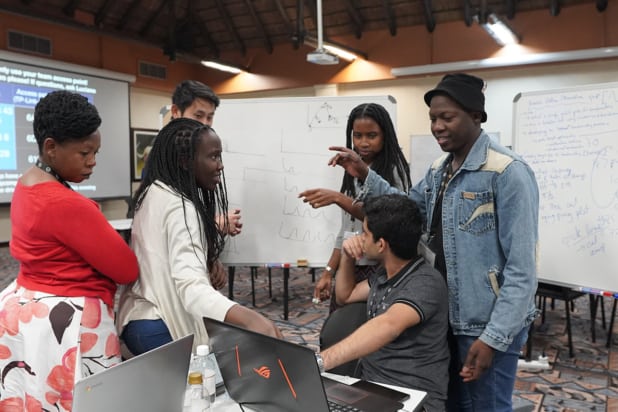
Farai Mazhandu and Mhlambululi Mafu argue that quantum technologies can help propel the continent into a new era
Steve Brierley argues that quantum computers must implement comprehensive error-correction techniques before they can become fully useful to society

Find the information you need from IOP Publishing’s world-leading medical physics and biophysics journals and books, dedicated to supporting and improving research across the field, from fundamental science through to novel applications and facilities.
 Read article: Adjuvant breast radiotherapy: KUH unlocks the clinical upsides of tangential VMAT
Tangential VMAT (tVMAT) is the treatment modality of choice for adjuvant breast radiotherapy at Kuopio University Hospital in Finland
 Read article: Mauro Paternostro: a vision of the quantum landscape
Quantum physicist Mauro Paternostro talks to Tushna Commissariat about the future of the quantum technology landscape
 Read article: Europe plans to build 100-qubit quantum computer by 2026
Funded by Quantum Delta NL, the quantum computer is expected to be made publicly available
 Read article: How schooling fish can be quieter than a solitary swimmer
A school of fish moving together in just the right way was found to be effective at reducing noise
 Read article: IOP Publishing and Physics World celebrate World Quantum Day
We round-up some of our best quantum content
 Read article: US astronomers slam cuts to the Chandra X-ray observatory
NASA says that increasing management costs means it cannot afford to the keep the “great observatory” operational
 Read article: MEPs call for ‘urgent action’ to implement post-quantum encryption standards
Some 20 members of the European Parliament say that new standards are needed to protect against quantum computers
 Read article: Get set for World Quantum Day 2024
Celebrate World Quantum Day on Sunday 14 April 2024 with Physics World
 Read article: Bluefors launches its next-generation gas handling system and control software
Bluefors is launching its new-generation gas handling system, redesigned with a focus on safety and reliability
 Read article: Peter Higgs: Nobel-prize-winning particle theorist dies aged 94
Peter Higgs's work in the 1960s contributed to the prediction of a new particle, the so-called Higgs boson
 Read article: Meet the ‘quantum plumbers’ uncovering the mysteries of fluid mechanics at the nanoscale
Philip Ball investigates the strange quantum effects that control water flow in carbon nanotubes
 Read article: Dispatches from the Great North American eclipse of 2024
Viewers in parts of Mexico, the US and Canada enjoyed a rare total solar eclipse yesterday
 Read article: Baryon acoustic oscillations hint that dark energy may have changed over time
DESI observations cast doubt on the Standard Model of cosmology
 Read article: Roll-to-roll-fabricated hybrid perovskite solar cells reach record efficiencies
Researchers calculate that large-scale devices would be cheap to produce, too
 Read article: Tackling England’s physics teacher shortage with a new apprenticeship scheme
Urgent action is needed to combat widening inequalities in access to physics education
 Read article: Planet-gobbling stars are more common than we thought
Spectral analysis of stellar “twins” also suggests a significant fraction of planetary systems may be unstable
 Read article: REBCO high-temperature superconductors are ideal for tokamak magnets, study suggests
Extensive research confirms material’s ability to create compact yet powerful fields
 Read article: Battery cyclers: shedding light on the detail of electrochemical materials and devices
High-performance battery cyclers offer reliable, accurate and repeatable test sequences in R&D and production settings
Physics World Jobs offers a range of opportunities for jobseekers with a background in physics or engineering. At all stages of your career, we can help find the job for you
For more than 60 years, the Lawrence Livermore National Laboratory (LLNL) has applied science and technology to make the world a safer place. Its defining responsibility is ensuring the safety, security and reliability of the nation’s nuclear deterrent
Tune into online presentations that allow expert speakers to explain novel tools and applications
A live webinar on 23 April 2024 giving clinical insights into the implementation and results achieved using RadCalc and custom scripts for patient-specific QA
Stay up to date with the latest international conferences, symposia and exhibitions for interdisciplinary scientists working across academic research and industry
15—16 May 2024 | Birmingham, UK
The Advanced Materials Show is a must attend for any materials engineer, R&D professional, scientist or product developer responsible for developing, manufacturing or integrating advanced materials technology